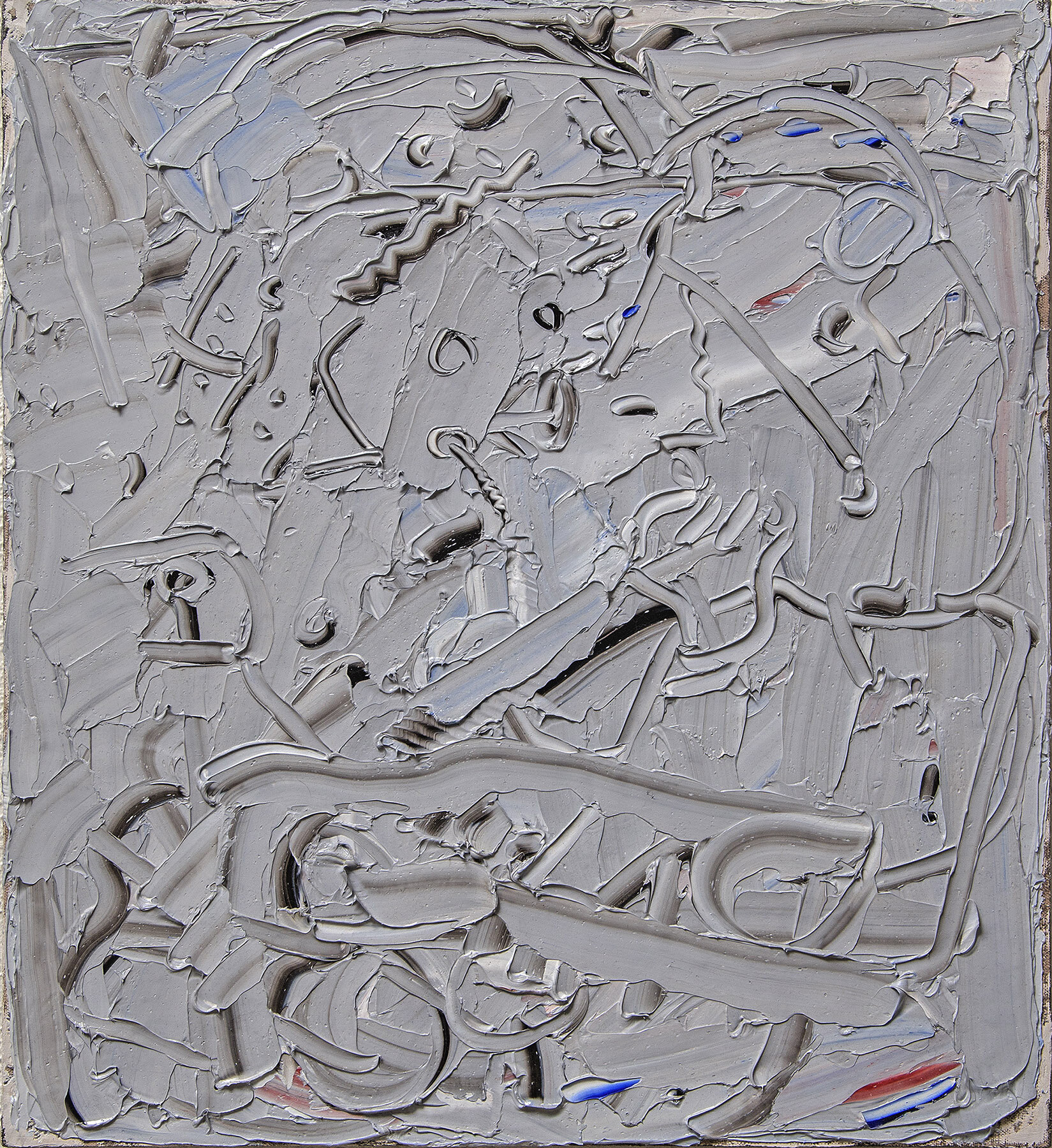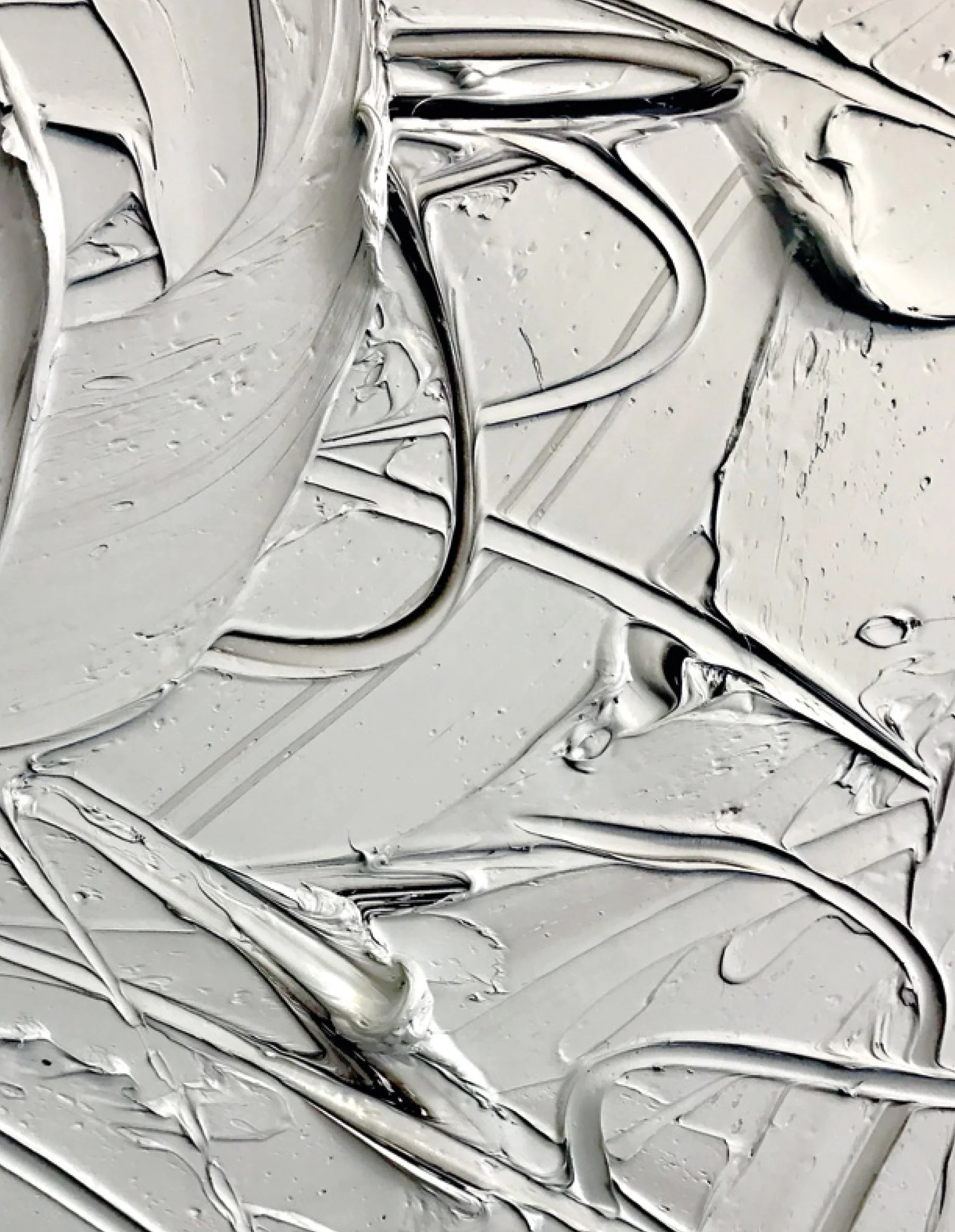
The palette of Liat Yossifor’s new paintings is calm, cool and collected. Soothing grays predominate, ranging from whisper-soft tints as delicate as a mourning dove’s feathers to steely shades that would be at home on a battleship.
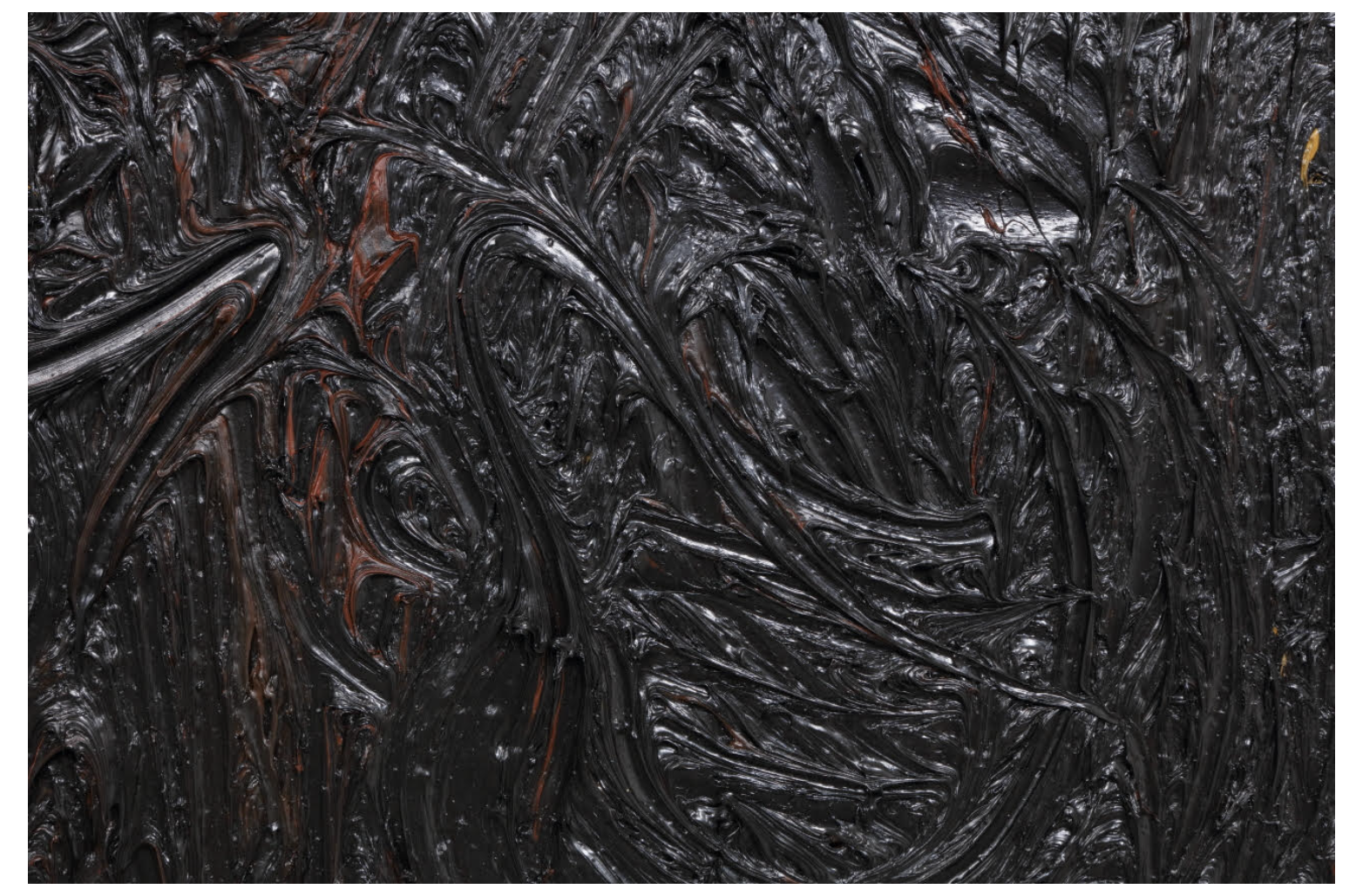
The lines, swipes and scrapes that rip across the fleshy surfaces of her deliciously intimate oils are fierce, furious and fearless. Made in the moment, with no thought of nicety, much less refinement, they take desperation beyond the point of no return.
The combination of tasteful gray and mad fury is quietly riveting. At Angles Gallery, it draws viewers into a world where the rules do not apply yet everything makes more sense than usual — and is often astonishing.
Imagine someone trying to make a figure drawing by running her fingertips through the glassy surface of a small pond or a large puddle. The tiny wakes made by her fingertips’ swift movements create lines that immediately disappear, leaving agitated traces but nothing that lasts: no substantial forms, definitive marks, clear boundaries.
Now imagine someone capable of moving so fast that she can nearly complete a figure study in the split seconds it takes for the water’s surface to return to its original smoothness.
That is exactly how Yossifor’s exhibition, “Performers From a Future Past,” feels and functions. Each of its six large and 12 small paintings seems to have been made in a matter of minutes, if not faster. The swift swipes of her palette knife — both its spatula and handle’s end — create ghostly traces that nearly disappear into the vagueness of the gray that she favors.
Like echoes or clouds that seem to depict images, Yossifor’s evocative abstractions suggest barely perceptible faces, figures and vehicles. Some appear to be bandleaders or agitators screaming through megaphones. Others recall acrobats, musicians and dancers, alone and in close-up or crowded together in distant groups.
No matter where Yossifor’s apparitions seem to swirl out of nothingness, they quickly disappear, fading into memories that just might be unforgettable.
– David Pagel
_____________________________________________________________________
Below the Eye
by Karen Lang, published in X-tra contemporary Art Quarterly
Volume 11 Number4, p. 56-59
Liat Yossifor’s new paintings pulsate to the beat of examined life. Melancholy and alive, they offer no open window through which body or mind might sail toward a better tomorrow. Below the Eye, the title of the recent series, alludes to the physical eye, the mind’s eye, and the way these paintings pull the viewer below the perceptual, the rational, or the given, into a creaturely realm where seeing and knowing uncouple. If this territory is alive, it is also melancholy. Pulling us below the eye, tearing open the wounds of possibility, these paintings lay bare “the expression of the expressionless, a crying from which the tears are missing.”[i]
It would be rather convenient to hang the feeling world of Below the Eye on the artist’s experiences of life under siege on ancient land. Yossifor was born in Israel. She emigrated to the United States just shy of her sixteenth birthday. In Israel, memorials to the unknown, the victims, the fallen, and the heroes stand while human victims and “heroes” fall. In Below the Eye swimmers are as frozen as statues and statues are as animated as human beings ready to die for a cause. Official culture perpetuates collective enchantments. These paintings pierce the political, social, and cultural skin of war, death, and commemoration. They depict creaturely life—life before political, social, and cultural expression; life beside these forms of expression. Crying without tears.
In the tradition of Giorgio Morandi and Philip Guston, Yossifor is a painter’s painter. To look at the work of a painter’s painter is “to recreate it, feeling in your wrist and fingers the sequence of strokes, each a stab of decision which discovers a new problem.”[ii] Yossifor begins by combining her source material—photographs of monuments, painted battle scenes, any image that strikes a chord—into new compositions. With a paintbrush she sketches outlines of these compositions onto prepared panel. Hand then leads the eye as she works in a wet on wet technique, transforming oil paint into figure, ground, form, and texture. Painting wet on wet requires her to work swiftly, close to the panel. The predominately dark palette raises the challenge of creating form and content intuitively. Whether small or large in size, these paintings are monumental in scale. They are mutable in two senses: in them we see both the process of making and an appearance that shifts according to lightening conditions. Like the art of Morandi and Guston, Below the Eye repays extended looking.
Painting is the experience of the painting—for the artist, and for the viewer.
Expressiveness arises in the very nature of depiction. The wet on wet technique lends primacy to the hand and full weight to expression in the process of making. What is depicted is no less expressive. Yet depiction encompasses more than style and subject. It also refers to the way painting engages the imagination and recognition unfolds in the viewing experience.[iii] The very look of Below the Eye complicates and extends recognition. The vital energy of the brushwork, the nihilistic palette, the viscerally uncertain subject matter, all these address me, engaging my imagination and eliciting a sense of reflection on my part. In the aesthetic response feelings awaken but nothing adds up. The paintings reverberate.
It’s difficult at first to perceive the subject of these paintings. This difficulty arises from the close interplay between medium, technique, palette, and subject. Extended looking disentangles figure from ground, but as in optical illusion, figure and ground, shape and stroke, vie for primacy in perception. Effectively, I perceive subject but I do not see it apart from surface. As subject renders surface and surface renders subject, I am inside the painting’s world of illusion, trapped in its snare. As my capacity to recognize through difference wavers, the paintings extend recognition. This complication and extension of recognition ushers in imagination and perception. I believe I see a body in that inky field in The Swimmers. Why is it there? Is it in motion or are those strokes building up its form? Is there something else, something I can’t make out? What does it mean? These paintings make me look. They afford ample imagination. They solicit perception, the coupling of seeing and thought.
The viewing experience of Yossifor’s paintings extends beyond my time in front of her panels. If seeing draws me into a world of illusion, a feeling world lingers. Recognition includes what I decipher in the painting and what the painting understands in me.[iv] I might not yet recognize what the painting understands in me. Description includes what is in the picture and thoughts after seeing the picture.[v] The picture might not yet recognize what I understand in it. That Below the Eye stays with me is its art. But it’s a haunting. For if these paintings reverberate with the expression of the expressionless, a crying from which the tears are missing, they resound in me with a recognition from which the words are missing. Only in thought after seeing the paintings do I come to some recognition, some description, of what I see in the pictures and the pictures understand in me.
Below the Eye draws on the subject and style of the national monument. Gigantic tower, ruler, soldier, man on horseback—the national monument translates abstract ideas of nation into tangible, easily recognized symbols. A visual analogue to Nietzsche’s depiction of “monumental history,” the national monument commemorates selectively chosen, great, and vanished moments from the past in order to fix memory for the future. [vi] Death, when it appears, finds its apotheosis in some ideal or other. Yet the history of the monument follows a path from the cemetery into the city and onto the open landscape. Poised conceptually between death and immortality, the monument has its historical roots in the grave marker.[vii] The mark of the death of an individual person.
Beginning with the subject and style of the national monument, Below the Eye coughs up the concept of death—death qua death—that marks the monument at its heart and that it is the monument’s brief to ameliorate. These paintings are not simply negative monuments. They do not depict heroism in reverse, one that would commemorate those left out of “monumental history” or that would celebrate virtues and vices absent from official monuments. Here, there is no apotheosis, no consolation or consoling. Like the “tiny, fragile human body” at the center of “a force field of destructive torrents and explosions” that Walter Benjamin made the emblem of modernity in the wake of World War I, in Below the Eye there exists no ready ideology, no convenient casting of blame, only the fragility of the human unheard above the din of state clamor.[viii] This is the expression of the expressionless.
The national monument is a site where the human being meets culture, and culture molds the human being into its own image. In Below the Eye the artist takes on the role of culture, fashioning her statue-like swimmers and her animated, human-like statues into her own image. Yet these are intuitive forms, shapes and strokes that have arisen from and beside the artist. Her knowing and unknowing of these forms, so tellingly and effectively depicted in the visible process of painting, lends these panels a life and power of their own—as if the artist birthed paintings that spewed out death and she, upon seeing them, was surprised at what she found there. Like Rilke’s “human trash, husks of men that fate has spewed out. Wet with the spittle of fate, they stick to a wall, a lamp-post, leaving a dark, filthy trail behind them.”[ix] These are outcasts in human form.
Something is torn open—in the artist, and in the viewer.
These paintings solicit perception but they do not resonate at the point where seeing and thought come together. Their emotive force accumulates in their complication and extension of recognition, and it gathers in a creaturely expressivity. I go Where Statues Go To Die, into that gruesomely beautiful, intestinal maw of creaturely expressivity—in the painting, and in myself. Crying from which the tears are missing evokes an immediacy of mourning, a howl before language and culture. These paintings’ wet on wet technique registers an immediacy of making, a dawning of form before form, and form itself. Below the Eye’s eloquent doubleness of form—death at the heart of the immortal monument; forms that have arisen from and beside the artist; the dawning of
form, and form itself—reverberates. It doesn’t add up. The burn is irremediable.
Rilke’s recently-impoverished aristocrat, Malte Laurids Brigge, was disturbed by the “human trash” he encountered in the streets of modern Paris. Designating these individuals “outcasts,” he sought to distinguish himself from them. Nonetheless, these “husks of men” seemed “more and more to recognize in Malte one of their own.”[x] Gradually recognizing himself in them, Malte questions whether “the whole history of the world has been misunderstood? Is it possible that the past is false,” he asks, echoing Nietzsche, “because we have always spoken about its masses, just as if we were telling about a gathering of many people, instead of talking about the one person they were standing around because he was a stranger and was dying.”[xi] What I see in Below the Eye is the creaturely expressivity of the outcast, the stranger, and the dying. What Below the Eye understands in me is that I am one of their own. Like these pictures, creaturely expressivity is the grimace I bear when I am beside myself in the immediacy of mourning, and that if I were to see would make me strange to myself, and to you.
Below the Eye’s eloquent doubleness includes a creaturely expressivity inside and outside the symbolic order of language and culture. These paintings evoke symbolization, for I must recognize the outcast before I can encounter the outcast in myself. They pierce and resist symbolization so that I might peer at the pictures’ creaturely expressivity, and at my own. The generous, unsettling inclusiveness of Yossifor’s paintings topples the distinctions erected by nations, cultures, and ourselves. Like two sides of a conflict facing off, painting and viewer see the broken forms, the darkness, in each other. Depiction is complicated and extended in these paintings so that recognition—of the other and the other in ourselves—may call a truce to what divides and remains hidden.
[i] Theodor Adorno, Aesthetic Theory, revised edition; cited by Robert Hullot-Kentor, “Foreword. Critique of the Organic,” in Theodor Adorno, Kierkegaard. Construction of the Aesthetic, trans. and ed. by Robert Hullot-Kentor (Minneapolis: University of Minnesota Press, 1989), xxii. This is one of Adorno’s descriptions of what he terms “authentic art.”
[ii] Peter Schjeldahl, “Tables for One. Giorgio Morandi’s still-lives,” The New Yorker, September 22, 2008, 93.
[iii] Michael Podro, Depiction (New Haven: Yale University Press, 1998). “Paintings address us,” Podro writes (vii), “and they do so in part through creating uncertainty; our engagement with them involves a continuous adjustment as we scan them for suggestions on how to proceed and for confirmation or disconfirmation of our response.” I am indebted to Podro’s searching study.
[iv] On the latter, see “Images that Understand Us: A Conversation with David Salle and James Welling,” L.A.I.C.A Journal, no. 27 (June-July 1980): 41-44.
[v] Michael Baxandall explains why descriptions are about the picture. “What one offers in a description is a representation of thinking about a picture more than a representation of a picture.” Michael Baxandall, Patterns of Intention. On the Historical Explanation of Pictures (New Haven: Yale University Press, 1985), 5.
[vi] If monumental history “is to be effective, how many differences must be overlooked, with what violence the individuality of what is past must be forced into a general form, its sharp edges and its lines broken in favor of this conformity.” Friedrich Nietzsche, “On the Utility and Liability of History for Life” [1874], in The Nietzsche Reader, ed. Keith Ansell Pearson and Duncan Large (Oxford: Blackwell, 2006), 133.
[vii] On the historical connection of cemeteries and monuments, see Hans-Kurt Boehlke, ET. al, eds., Wie die Alten den Tod gebildet: Wandlungen der Sepulkralkultur 1750-1850 (Mainz: Hase und Koehler, 1979); and Richard A. Etlin, The Architecture of Death: The Transformation of the Cemetery in Eighteenth-Century Paris (Cambridge, Mass.: MIT Press, 1983).
[viii] Walter Benjamin, “Experience and Poverty” [1933], trans. Rodney Livingstone, in Selected Writings/ Walter Benjamin, vol. 2, 1927-1934, ed. Michael Jennings, Howard Eiland, and Gary Smith (Cambridge, Mass.: Belknap Press of Harvard University Press, 1999), 732.
[ix] Rainer Maria Rilke, The Notebooks of Malte Laurids Brigge, trans. Stephen Mitchell (New York: Vintage, 1990), 39.
[x] Eric Santner, On Creaturely Life. Rilke, Benjamin, Sebald (Chicago: University of Chicago Press, 2006), xvi.
[xi] Rilke, The Notebooks of Malte Laurids Brigge, 23.
__________________________________________________
Agonisms
Kristina Newhouse, Pomona College Museum of Art Catalog Essay, 2007
In order to view the monochromatic paintings of Liat Yossifor, significant adjustments in perception must be made. The viewer is drawn into the seductive darkness by the artist and then asked to make out the subtle contours of numerous human bodies. At first, the action of each painting is difficult to discern—and then, incrementally, understanding begins to emerge. The tightly-framed compositions depict the waning moments of a melee. Like the initial images of any fresh conflict, the violence she portrays is nearly incomprehensible but then, as everything comes into focus, sadly and sickeningly familiar.
To work in this visually discrete manner, Yossifor makes many sketches from figurative tableaux she has arranged and photographed. She then creates a background from thin washes of oil paint and dry brushwork on panel. In the foreground, she uses a wet-on-wet technique to excavate each life-scale figure from thick layers of oil paint. It takes confidence and a little faith to manipulate the medium in this manner. Given the almost undifferentiated dark tones and opacity of her materials, she labors in near blindness. There is a window of only a few days within which to complete the composition before it dries. An intuitive “body memory” of human shape must override critical judgment to guide Yossifor’s hand in the task of defining forearm, cheek, and torso. She cannot know with certainty whether a composition truly succeeds or fails until much later when she is able to glaze its surface and thereby coax out the subtleties of her brushstrokes.
For her presentation at the Pomona College Museum of Art, Yossifor sought inspiration from past masters of figuration. She is fascinated by the attenuation and organic abstraction of the human figure in El Greco’s Laocoön (c. 1610-1614). Another source is the almost theatrical emotional charge and curious distortion of three-point perspective in paintings by Romantic artists Théodore Géricault and Eugène Delacroix. From the late Black period (1819-1823) of Francisco José de Goya y Lucientes, Yossifor gained insight into rendering the nuances of dark and shadow. From Goya’s horrific series, The Disasters of War (c. 1810-1820, published in 1863), she learned the grim economy with which an artist can convey the ruination of human beings at the hands of one another.
In many early nineteenth-century portrayals of violence by Géricault and Delacroix, a tumultuous mass of humanity crowds the chaotic foreground. Such works teem with flailing limbs, contorted bodies, and faces set in expressions of triumph, bloodlust, supplication, fear, or pain. Géricault and Delacroix oftentimes provided broad clues so viewers could determine with whom their sympathies should lay. Heroes and tragic victims were commonly supplied with a pale complexion, noble brow, and straight Grecian nose—artistic conventions that readily distinguished them from more “barbaric” foes.
By contrast, Yossifor’s combatants cannot be differentiated; each are rendered in likeness. Within this mode of representation, Yossifor proposes a non-polemic meditation on violence. This is not to say she approaches her subject with detachment. In fact, the opposite is true; her paintings are highly emotionally charged. Simply, Yossifor has chosen not to take sides. Hers is a fantastical, aesthetic chronicle of war’s activities, an abstract exercise in being present in the space of conflict. She provides viewers with no foreknowledge of the adversaries, their causes, or the outcome of their conflicts.
Without protagonist to cheer on or antagonist to condemn, the viewer is left to consider the plight of all participants solely as agonists. To agonize is to strive for victory in a contest of will and might. Agony is characterized by great anguish, as suffering is undoubtedly tethered to any prospect for conquest. The agonies of battle are convulsive; there is pause for neither compassion nor introspection until the last spasms of violence have subsided.
The bleak scenes in Yossifor’s Dusk and Blue (both 2006) are governed by dark pathos. The adversaries who grapple with one another appear at the brink of exhaustion. Though their energy is flagging and the ground around them littered with the bodies of fallen comrades, they persevere. None seem capable of quelling the overwhelming desire to crush opponents into submission. The burden of such actions feels unbearably heavy. In these paintings, Yossifor conveys how, with every successive blow, the combatants become increasingly debased, to the point where they risk sacrificing some vital part of their humanity.
Without question, the vanquished have the most to lose in conflict. Yet, the victors never come away completely unscathed. Subjugation is ultimately reductive and dehumanizing for the agonists of both sides. No cruelty perpetrated by one man against another can compare with the dehumanization of violent death. Death is indiscriminate, as likely to snatch away the righteous, as the wicked (these categories being entirely dependent upon who is asked to ascribe them). As life is stripped away, so too is identity. To the dead, it no longer matters whether the side they defended has won or lost.
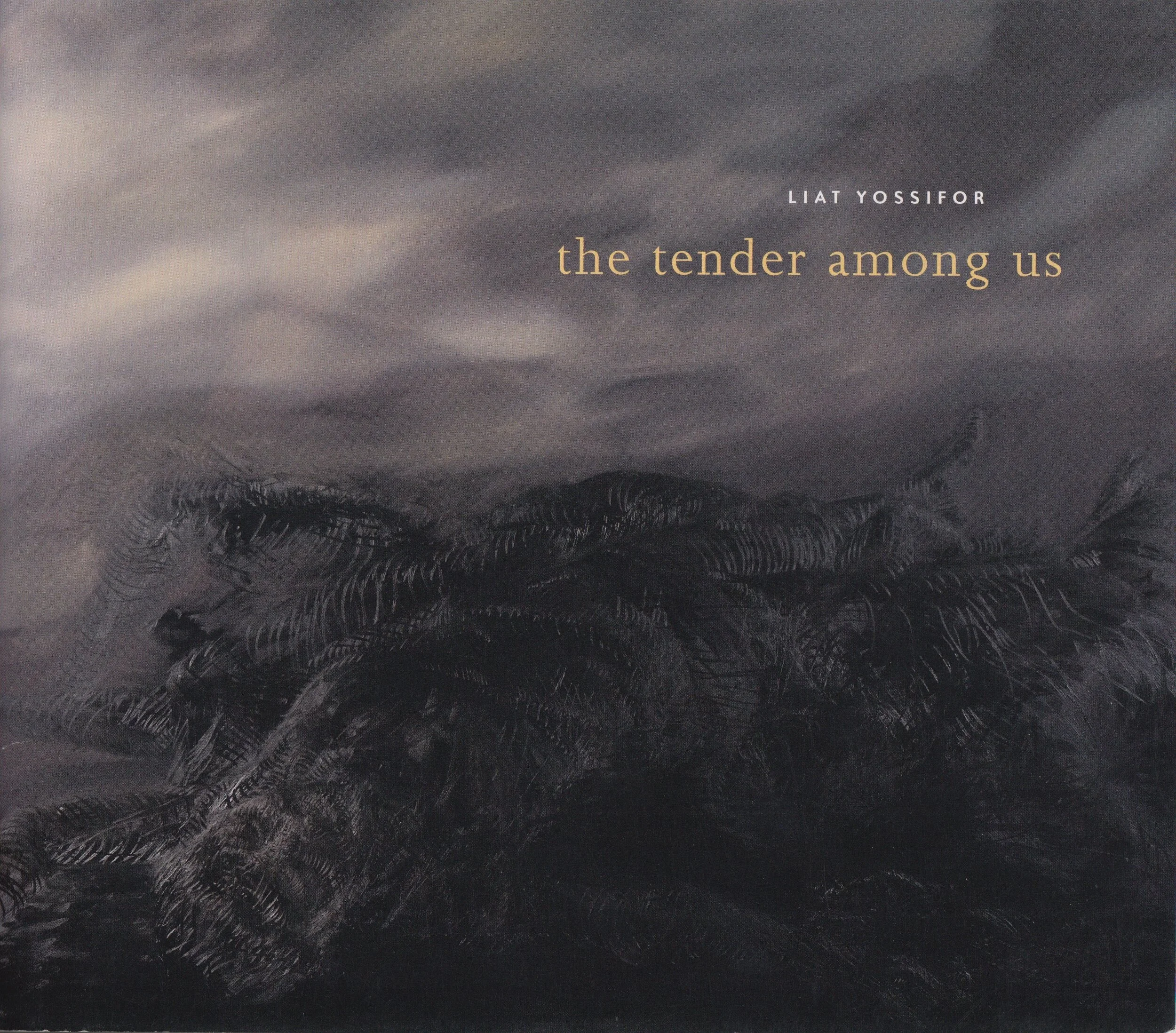
The land upon which wars are fought does not conceive of itself as territory. Like death, it cares little about victory and defeat. The soil embraces the dead equally, without prejudice or animosity. In The Tender Among Us I and II (both 2006), the anonymous contours of the dead and dying mimic gentle hillocks and valleys as if yielding to the land. In these compositions, Yossifor obliquely acknowledges the possibility for rejuvenation at war’s end. Inevitably, the spoiled landscape of battle heals. Within a generation or two, the names and deeds of those who had fallen on its fields are forgotten.
In a symbolic sense, the sparring factions of Liat Yossifor’s new painting series might be seen as embodying the opposing poles of vengeance and forgiveness. The impulse to remember and retaliate is pitted against the need to let go. In vengeance, forgiveness is resisted. In forgiveness, the cycles of offense and retribution are put to an end. In myriad scenarios of social justice, there can be a time and place for both (although today, the balance seems unfortunately weighted towards vengeance and protracted violence). Without at least pause to consider forgiveness, the unnamed combatants of The Tender Among Us may never find their way out of the dark landscape of mutual destruction. One can only hope each will soon have the wisdom to declare “Enough!” so that the ameliorative processes of justice can begin.
Kristina Newhouse is curator of the Torrance Art Museum.
_________________________________________________________
Training Ground
Article published in NY Arts Magazine, Carrie Patterson, May – June 2007 Issue
Liat Yossifor’s recent monochromatic portraits shift politics into process, clashing the tradition of modernist color-field painting with a conceptual concern about identity and invisibility, the body, its place in history and conflict, and the true depth of surface.
The work features images of women performing aggressive, confrontational stances. Most of the models are Israeli with an actual history of service in the armed forces. Like sisters or soul mates, sources of desire and conflict, these women are mirrors for Yossifor herself, who did not serve in the Israeli military due to the fact that she moved to the States as a young teenager. Together, painter and subject trace a diaspora of women through hypothetical subjects, which straddle the two extremes of engagement. Together, they imagine a community of women who confront the legacies of their bodily conscription to inherited causes while at the same time refusing the violence of their own representation.
For the viewer, the subject of Yossifor’s work is mysterious; at first, the canvas appears, at an angle, as brushstrokes on a monochromatic surface. But, under a particular light, at just the right angle, the subject appears—slowly, magically or suddenly, depending on the trajectory of one’s approach.
The palette of this series is serious, earthy and rich: Venetian reds and Mars brown, flesh tones, warm whites and lamp black. These are colors that refer primarily to the body—hair, skin, pupils, the inside of the mouth, as well as the abject and dissolving places beyond the surface of the skin. With the assistance of her models, Yossifor makes a new kind of self-portrait, engaging a process that is at once painterly and social. She uses the monochrome to tweak the viewer’s idea and perception of difference, to see what isn’t at first visibly there through contiguous and homophonic gestures. The stroke of the brush is the fall of the hair, the wrinkle in clothing composed by the very brush-fibers and the hard-edged lines are the shape of the defiant mouth, closed against opening, to create a surface on the brink of speech. The red attracts, but like a training manual, it holds information: it is coded, meant to be read.
As critic Ann Eden Gibson has suggested, traditional monochromatic painting can be a rich site for thinking about “difference,” if the work is read against the grain of standard art historical interpretation. Rather than considering monochromes as some kind of pure materiality or metaphysics, she posits these works as telling “a history of attempts to escape the phallocentrism of language, the violence of representation and the control of bodies marked as different.” Yossifor’s program is similar: a subtle insistence on the plurality of her “grounds,” affecting a metaphysical crisis by paralleling the specifically female bodies pictured there with the conditions of their materiality in paint.
Demanding, proud, engaged—the image reveals itself. Where at one moment very little can be seen, now the gaze is direct. But then the figure itself starts playing tricks on the eye. Between her body and her pose, where exactly is the figure of the woman? Between her body and the background, what is the differentiation between her image and the ground she came from, between “her” and her “motherland?” The works suggest the embedded nature of this particularly gendered “feminine” conflict, and at the same time, or perhaps as a result of such circumstance, the invisibility of this struggle.
In Yossifor’s case, “painting” remains a verb intimately tied to this process of revelation. To see is the goal of her laborious work. Imagining and sketching each figure repeatedly in a series of meditative acts, Yossifor accumulates brush strokes on her monochromatic panels until the female figure is literally drawn out from an undifferentiated background. The working time for this process is only a few intensive days, a solitary act by the artist concentrating her will and her vision while her paint is still wet.
The apotheosis of this activity—what Reinhardt, for example, considered to be the end of painting itself—are Yossifor’s black paintings. This is a focus of the body only reserved for such serious acts of training as the practice of the Zen master, the martyr, the spy on a reconnaissance mission. Here Yossifor works the material paint into a figure through known and repeated gestures. In the black pigment her hand must see what her eyes cannot. Every stroke disappears into the abyss.
It is here, in the condition of a not knowing, that Yossifor finds her subject. Reversing and confronting the historically-loaded anti-Semitic idea of the “blind” Jew, who cannot “see” the “light of Christ”, Yossifor rescues and redeems a body marked abject, not just by material conditions but a belief system whose faith centers on eternal questioning, investigation and re-reading. Nothing is a given in the ancient Talmudic system, and from Nothing emanates everything.
Because her subject matter appears only to the person who is willing to approach the painting, Yossifor’s phenomenological strategy makes the act of seeing it part of the rigor also required of her viewer. No longer a self-sufficient object, the meaning of the work is shifted outside the frame. The paintings exist only upon engagement: they train the viewer to contemplate their materiality as products of history, presenting a surface moment that only composes itself because it has been suspended in the varnish between presence and disappearance.
The instant when the figure becomes visible, stepping out of the void in confrontation and recognition, marks the coincident moment where viewer and painter converge across time to overcome a unique and momentary blindness.
“Abandoned in the middle of the road, feeling the ground shifting under his feet, he tried to suppress the sense of panic…as if he were swimming in what he had described as a milky sea, his mouth was already opening to let out a cry for help when he felt the other’s hand. Calm down, I’ve got you.”